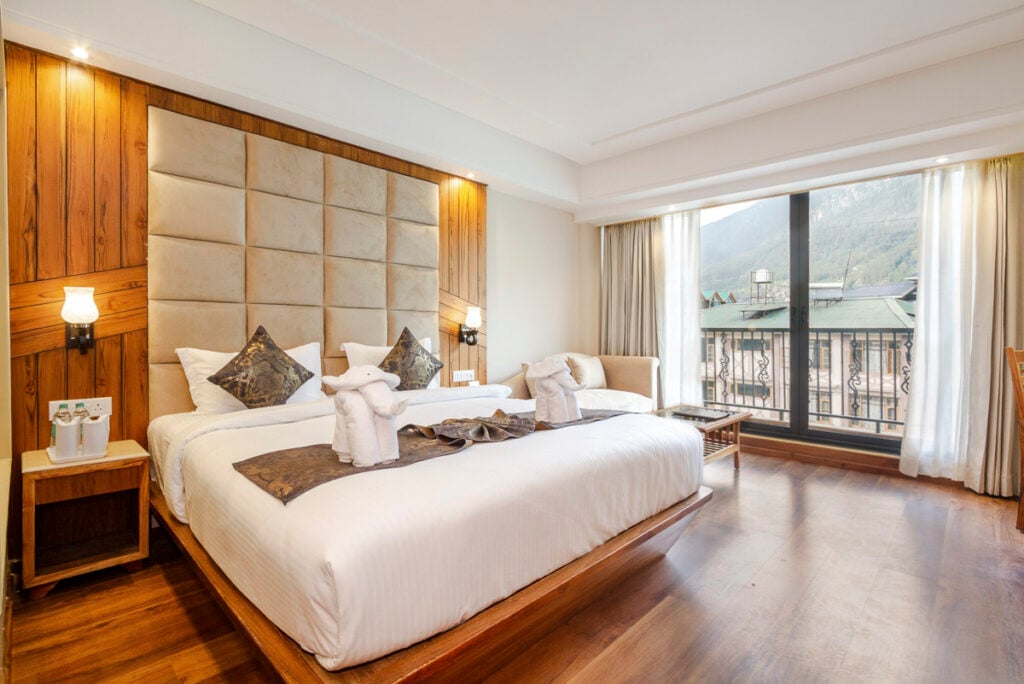
Plenty of people come home from a hotel stay and say the same thing: they haven’t slept that well in months. It’s easy to put it down to being on holiday, with no alarm, no chores and no work emails waiting in the morning. That plays a part, and so does the way good hotels set up their rooms.
Good hotels put a lot of thought into how their rooms are set up for sleep, and many of the things they do are surprisingly easy to copy at home. Looking at them one by one can help you work out which changes would make the biggest difference to your own bedroom.

One of the most noticeable things about a good hotel room is the size of the bed. Many hotels use king or super king sized beds in their doubles, which gives two people a lot more room to move without disturbing each other.
At home, most couples in the UK sleep on a standard double, which measures 135cm by 190cm. That works out at just 67.5cm of width each, which is narrower than a single bed. If you’ve noticed that you sleep better with more room, Simba’s spacious king size mattress choices measure 150cm by 200cm, giving you 15cm more width and 10cm more length than a standard double. That extra length is especially welcome if either of you is on the tall side.
Of course, a bigger bed needs a bigger room, so it’s worth measuring carefully and leaving enough space to walk around comfortably on both sides.
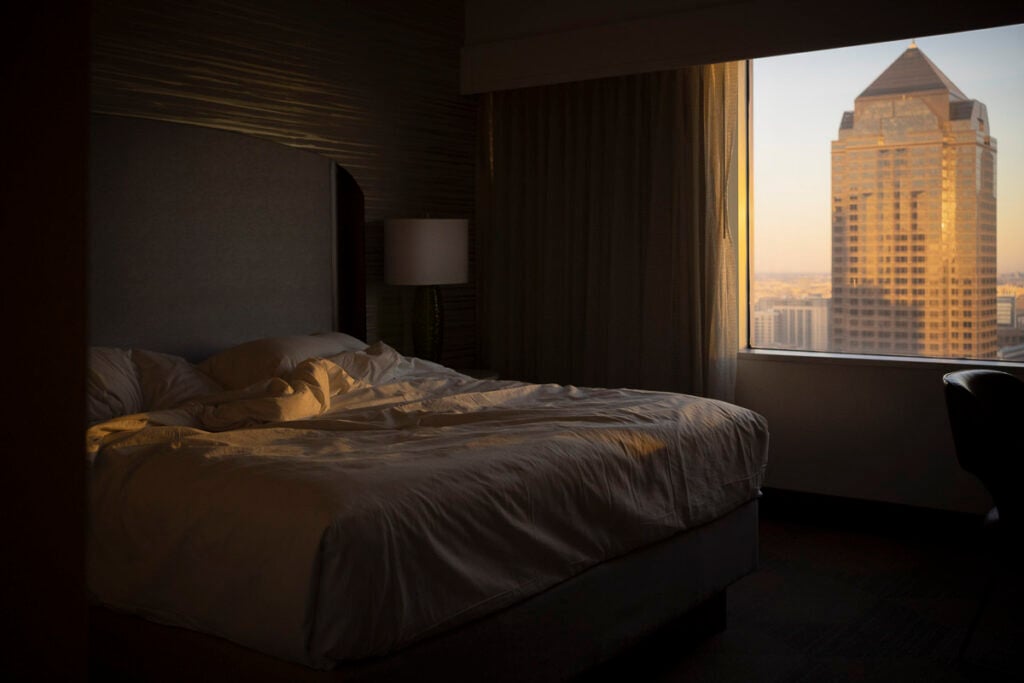
Hotels replace their mattresses regularly, and they look after them in between. Mattresses are rotated, protected and kept in good condition because a poor bed is one of the quickest ways to get a bad review.
Many people at home, by contrast, keep a mattress for far longer than they realise. If yours is dipping in the middle, if you wake up stiff, or if you sleep noticeably better anywhere else, those are all reasonable signs that it may be time to think about a replacement. Rotating your mattress as the manufacturer recommends, and using a mattress protector, will help any new one stay comfortable for longer.
If you do decide to replace it, look for a mattress that suits the way you sleep and lets air move through it, since staying cool is a big part of why hotel beds feel so restful. A long home trial is helpful too, as a few minutes lying on a mattress in a shop can’t tell you how it will feel after a full week of nights.
Crisp, freshly laundered bedding is part of what makes a hotel bed feel so inviting. Hotels change sheets frequently, and they tend to use plain, breathable fabrics in white or light colours.
You don’t need to wash your sheets every day to get a similar effect. Changing them weekly, keeping a spare set so there’s always a clean one ready, and choosing natural, breathable fabrics like cotton can all help. Many hotels also use a duvet and pillows that are well matched to the room temperature, which brings us to the next point.

Hotels are designed with sleep in mind. Blackout curtains are standard, rooms are often well insulated against noise, and guests can usually control the temperature themselves.
At home, the bedroom often doubles as a home office, a dressing room or a storage space, and that can make it harder to switch off. A few simple changes help:
- Use blackout blinds or curtains, or an eye mask if that isn’t practical.
- Keep the room cool, somewhere around 16 to 18 degrees.
- Clear visible clutter, especially work materials, from sight.
- Keep screens out of the room where you can, or at least out of reach of the bed.
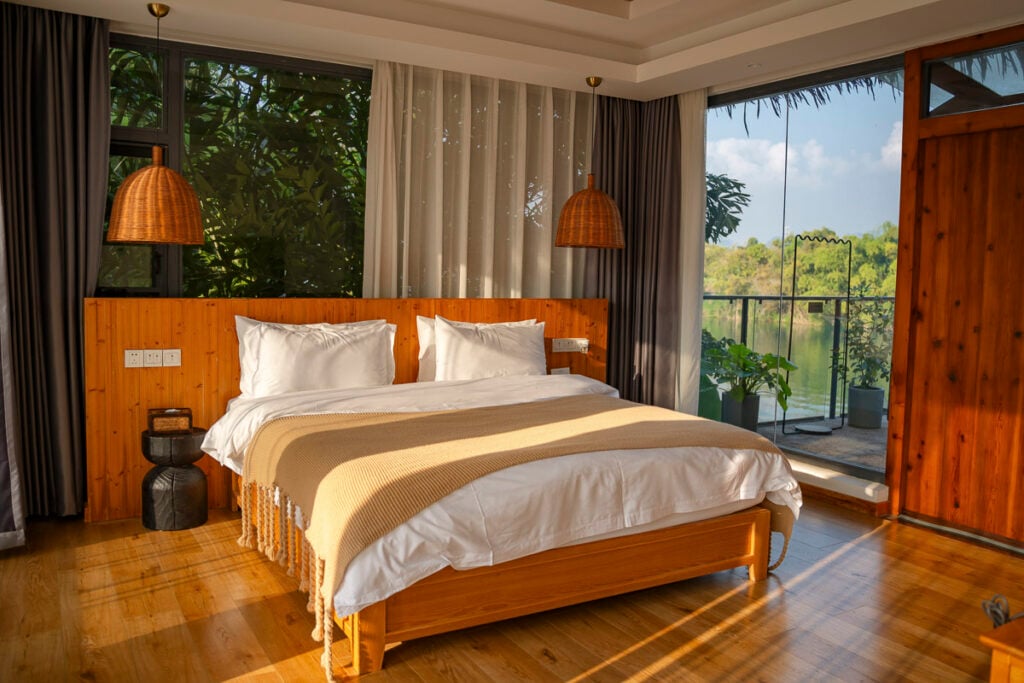
On holiday, your evenings tend to look quite different. You might have a relaxed dinner, a walk, a bath, and then go to bed without the usual rush of household tasks and screens.
That slower evening does a lot of the work. You don’t need to recreate a full holiday every night, but building a short wind down period into your routine, with dim lights, no work and something relaxing for half an hour before bed, can make a real difference to how quickly you fall asleep.

Hotels pay attention to details, and those details make a room feel restful. A bedside lamp with a warm bulb, a carafe of water, a comfortable chair, a pleasant scent and tidy surfaces all help create a sense of calm.
None of these are expensive or difficult, but together they can transform how your bedroom feels at the end of the day.
Sleeping well in a hotel is rarely an accident. A bigger bed, a well kept mattress, fresh bedding, a cool and dark room and a calmer evening routine all play a part. Some of those, like a new mattress or a larger bed, are bigger decisions, while others, like blackout curtains and a tidier room, can be done this weekend. Pick the changes that matter most to you, and your own bedroom can start to feel a lot more like the room you didn’t want to leave.